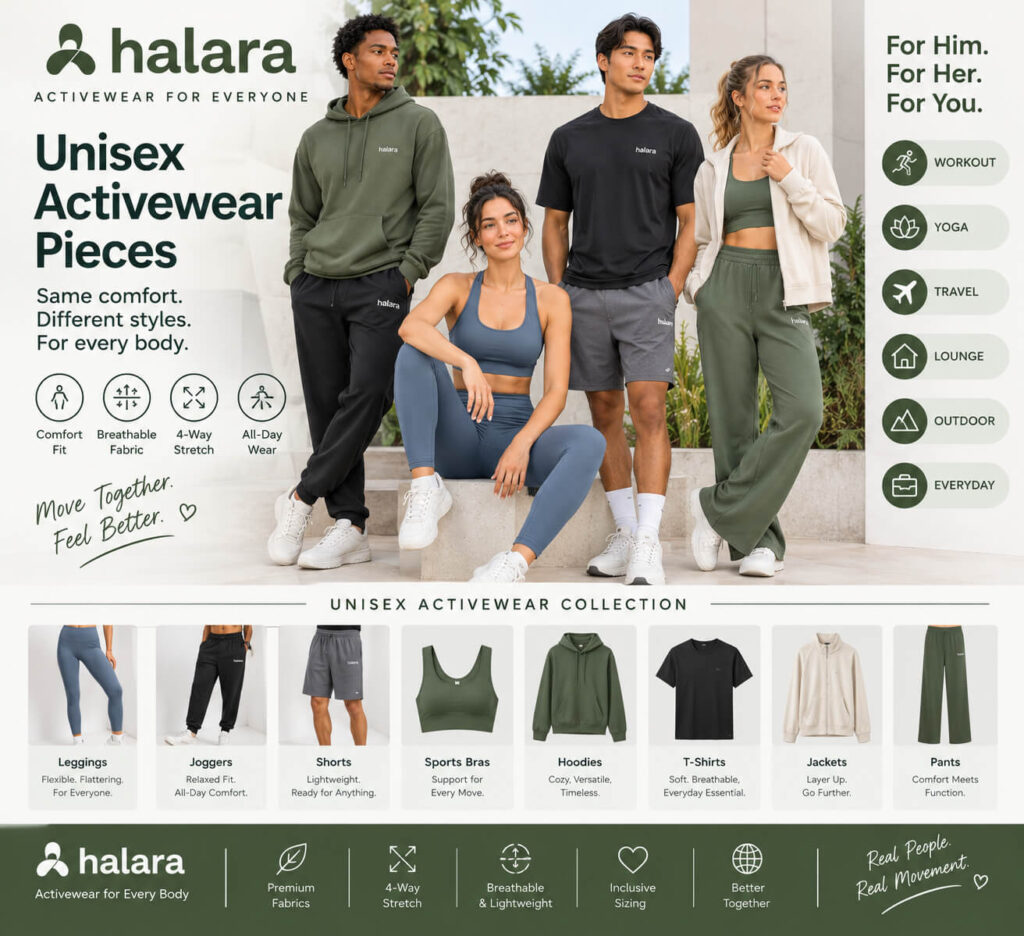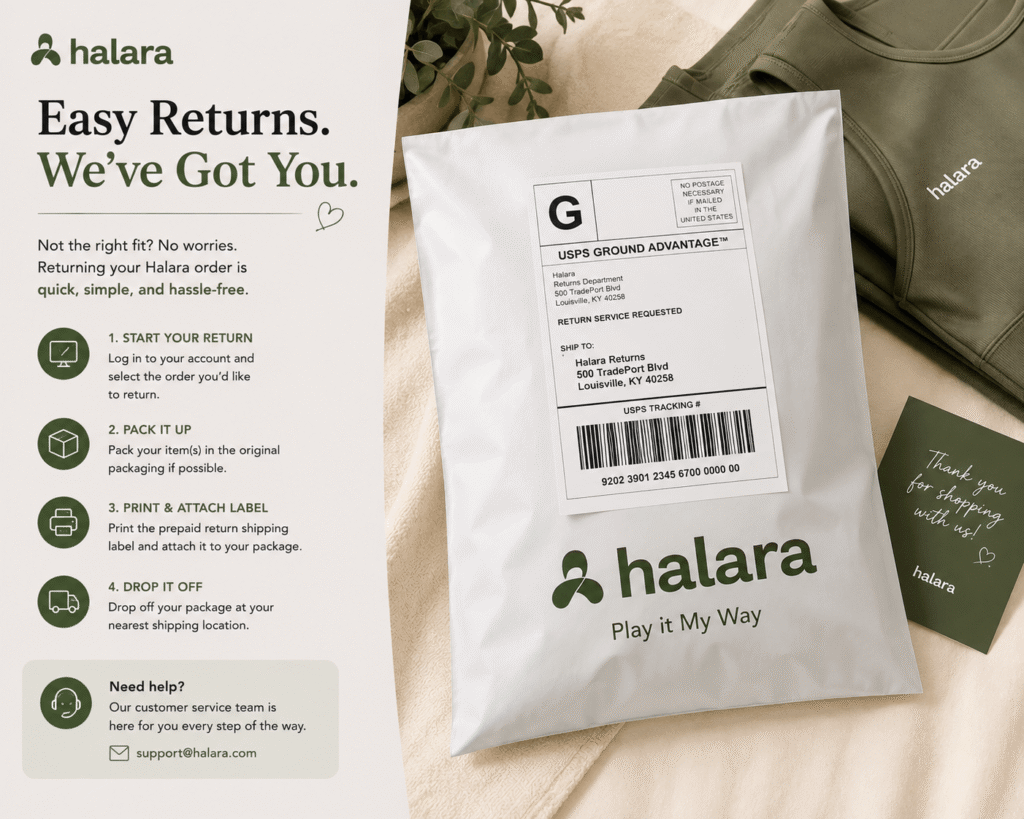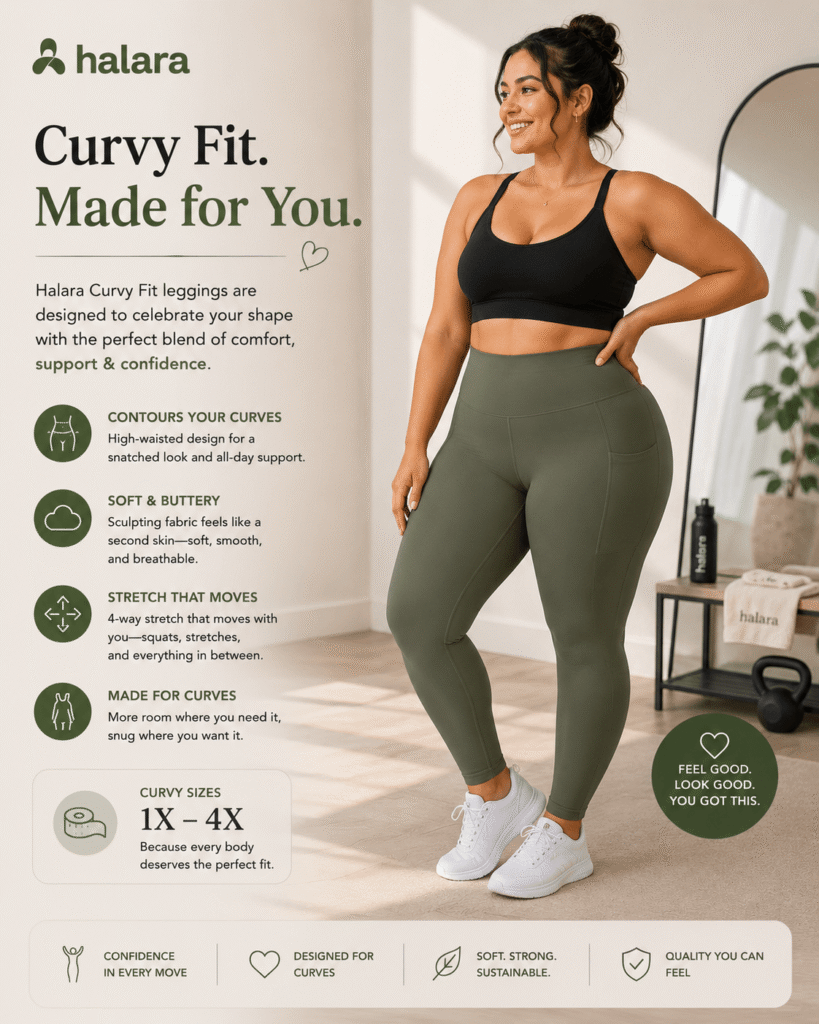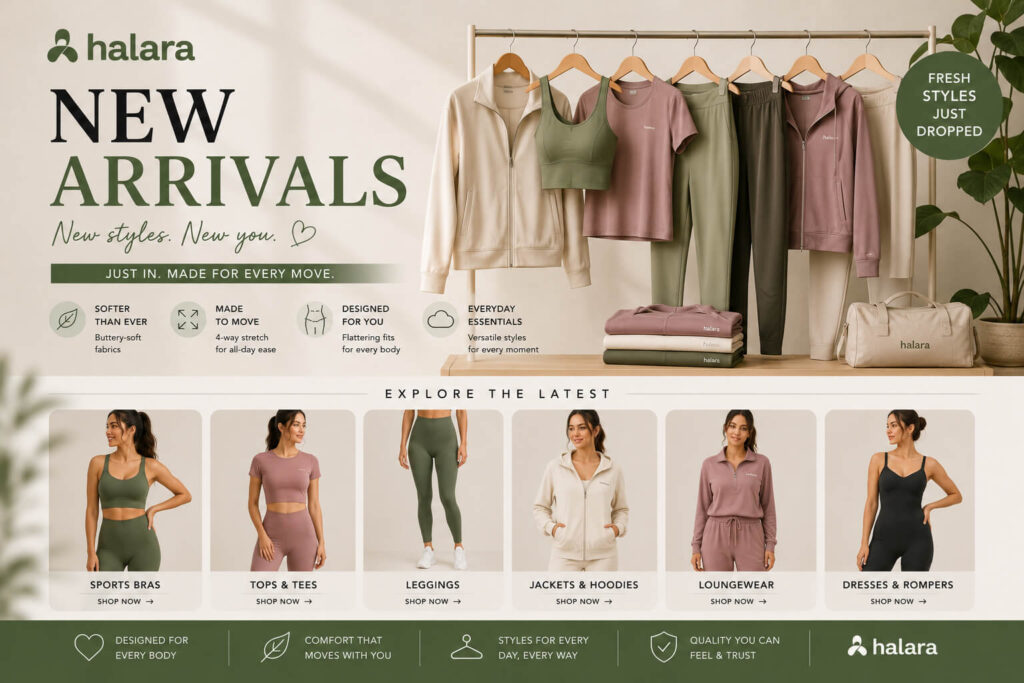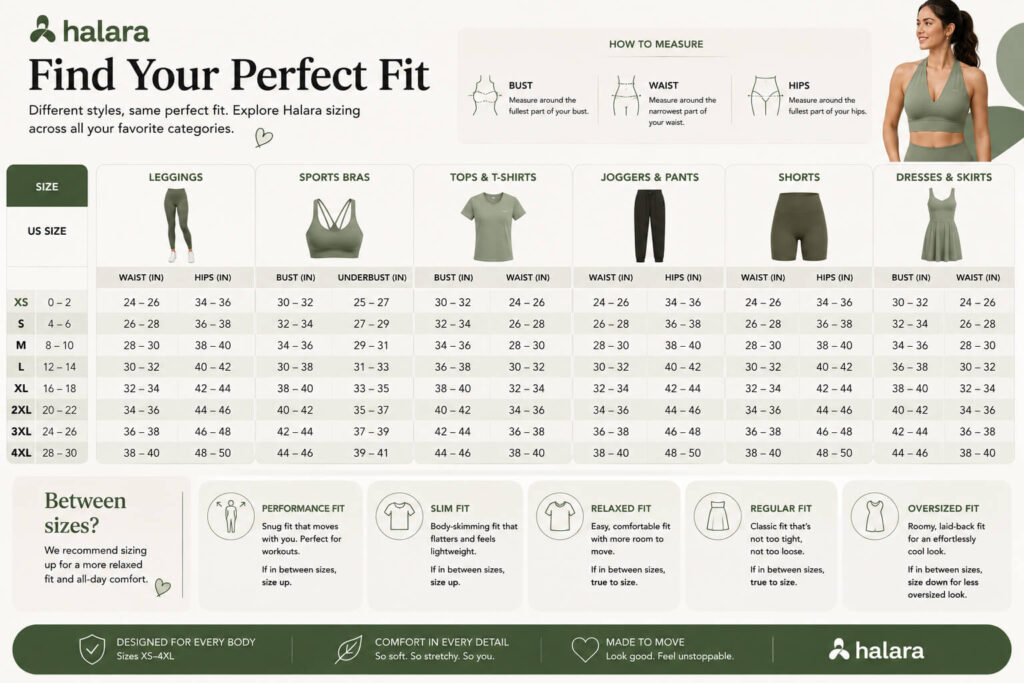
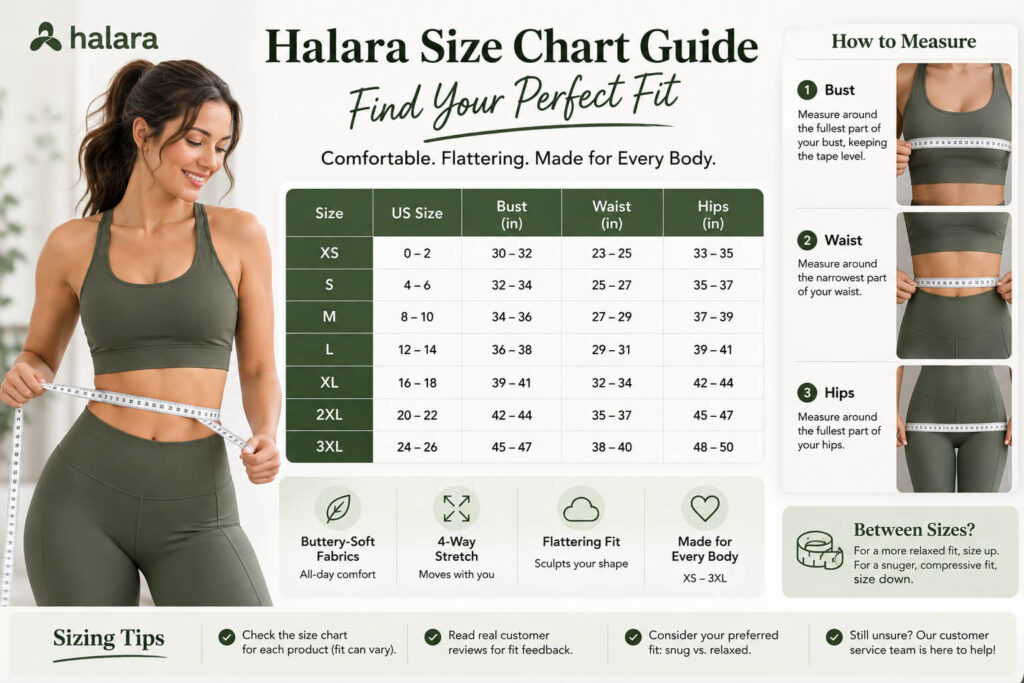
Halara doesn’t use one universal size chart — it uses a different chart for nearly every product category (dresses, shorts, pants, denim, and more), each based on your actual body measurements rather than a generic label. This guide walks through exactly how Halara’s sizing system works, how to measure yourself correctly, and how to avoid the most common sizing mistakes, based on Halara’s official sizing guidance and aggregated customer fit reviews current as of mid-2026.
Quick Overview: How Halara’s Size Charts Work
| Detail | Info |
|---|---|
| Size range | XS to 3XL, covering standard and plus sizes |
| Measurement units | Both centimeters (CM) and inches provided |
| Chart type | Category-specific — separate charts for dresses, shorts, pants, denim, tops, etc. |
| Key measurements used | Bust, waist, and hips (plus inseam for bottoms) |
| Where to find it | On each individual product page, not a single sitewide chart |
Why Halara Uses Category-Specific Charts
Unlike brands with one master size chart, Halara maintains separate size charts for different product categories — dresses, shorts, pants, denim, and more each have their own dedicated sizing page. This is actually a deliberate design choice: garment fit varies significantly between a fitted dress and a pair of relaxed joggers, so a single generic chart wouldn’t accurately reflect how each style is supposed to fit. The tradeoff is that you can’t assume your size in one category automatically carries over to another — checking the specific product’s chart each time is the safer approach.
How to Measure Yourself for Halara Sizing
Halara’s own sizing guidance recommends the following approach:
- Gather your tools: a flexible cloth measuring tape, a mirror to check alignment, and something to record your numbers.
- Stand straight in front of the mirror in minimal, form-fitting clothing for the most accurate reading.
- Measure your bust at the fullest part, keeping the tape level around your back.
- Measure your waist at the narrowest point, usually just above the belly button.
- Measure your hips at the fullest part, typically around 7–8 inches below your waist.
- For bottoms, measure your inseam from the crotch seam to where you want the garment to end, to compare against inseam options like 5-inch, 7-inch, or 9-inch shorts and leggings.
- Compare your numbers to the specific product’s size chart — not a general brand-wide chart — since measurements can vary by category and style.
What to Do If You Fall Between Sizes
Halara’s own guidance specifically addresses this: if your measurements land between two listed sizes, factor in fabric stretch and your personal fit preference, not just the raw number. A few practical rules of thumb:
- For compression or fitted styles (leggings, bodysuits): sizing up generally gives a more comfortable, less restrictive fit if you’re between sizes.
- For relaxed styles (joggers, oversized tops): sizing down can work if you prefer a closer fit, since these styles are already built with extra ease.
- For structured pieces (work pants, tailored trousers): sticking closer to your measured size is usually safer, since these styles have less give than stretch-knit fabrics.
Category-Specific Sizing Notes
Dresses
Halara maintains a dedicated dress size chart separate from other categories. Reviewer feedback suggests bodices on styles like rompers and jumpsuits tend to run true to size, while length can vary — worth double-checking listed garment length if you’re tall or prefer more coverage.
Shorts
Halara’s shorts sizing guidance specifically recommends starting with waist and hip measurements, then factoring in fabric stretch, rise, and how much room you prefer through the thigh. Inseam length matters as much as the size label here: a 5-inch inseam is described as the most versatile option, while 7-inch and longer styles are recommended for more coverage during walking, travel, or everyday wear. The guidance is also clear on fit red flags — shorts should feel secure at the waist without pinching, and shouldn’t pull across the hips or ride up excessively; if they do, trying a different size, inseam, or fabric is the recommended fix rather than assuming that’s just how they fit.
Pants and Denim
Pants and denim each have their own dedicated size charts as well, reflecting the different rise, stretch, and structure of denim compared to Halara’s stretch-knit activewear pants.
Leggings and Activewear
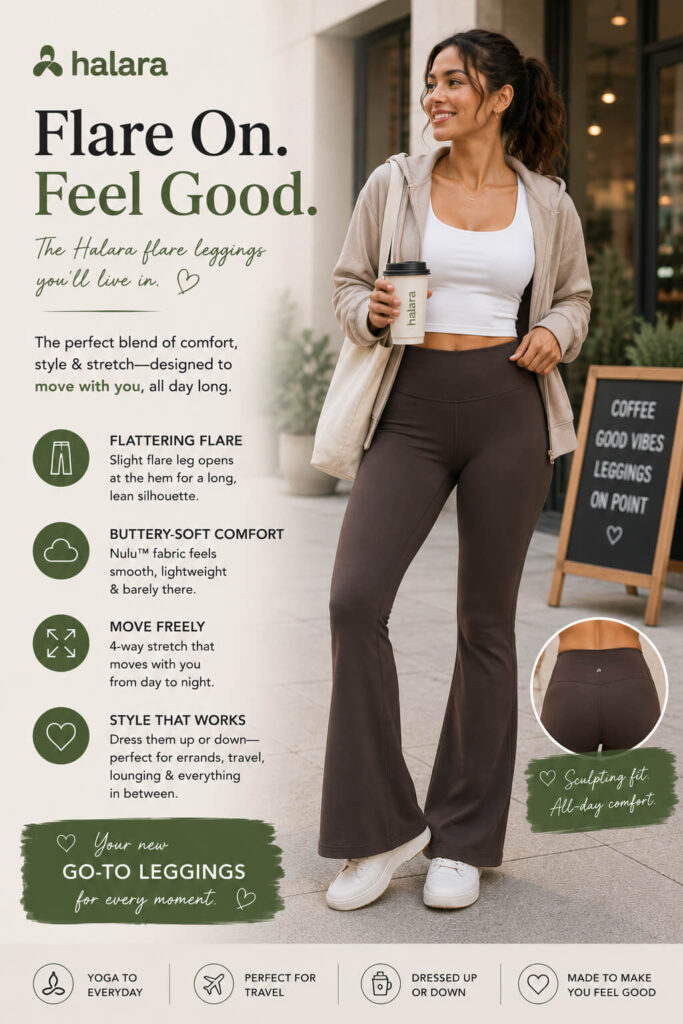
While leggings don’t have a separate chart listed above, category reviews consistently note this is the style most likely to run small at the waist due to genuine compression — worth keeping in mind if you’re between sizes and want a less snug fit.
Common Sizing Mistakes to Avoid
- Assuming your size carries over between categories. A Medium in Halara dresses doesn’t guarantee a Medium fits the same in leggings or denim — always check the specific chart.
- Measuring over bulky clothing. This throws off bust, waist, and hip numbers — measure in minimal, form-fitting clothing for accuracy.
- Ignoring the inseam for bottoms. Especially for shorts and leggings, inseam length affects fit and comfort as much as the overall size label.
- Not accounting for fabric stretch. A compression-style legging and a relaxed jogger behave very differently even at the “same” size, so factor in the fabric type before deciding to size up or down.
- Skipping reviews for the specific item. Since Halara’s sizing is generally reported as more reliable within a given style than across the whole brand, checking reviews (ideally from shoppers who mention their measurements) is one of the most useful extra steps you can take.
Frequently Asked Questions
Does Halara use one universal size chart? No — Halara maintains separate size charts for different categories like dresses, shorts, pants, and denim, since fit and structure vary significantly between garment types.
What measurements does Halara’s size chart use? Primarily bust, waist, and hip measurements, with inseam length also factored in for shorts and leggings.
What should I do if I’m between two sizes on Halara’s chart? Consider the fabric’s stretch and the garment type — sizing up is generally safer for compression or fitted styles, while sizing down can work for relaxed, already-roomy styles.
Are Halara’s size charts accurate? Generally yes when followed carefully, though real-world fit can still vary by category — leggings in particular are more frequently reported as running small at the waist compared to other categories.
Does Halara offer plus sizes? Yes, Halara’s size range extends up to 3XL across many categories, with charts provided in both centimeters and inches.
Final Thoughts
Halara’s category-specific size charts are more detailed than a typical one-size-fits-all brand chart, but that also means the extra step of checking the specific product page — rather than assuming your usual size — really does matter. Measuring yourself accurately, paying attention to inseam length for bottoms, and factoring in fabric stretch when you’re between sizes are the most reliable ways to get a good fit on the first try. When in doubt, pairing the official size chart with reviews from shoppers who share your measurements is the most practical way to shop with confidence.
Related Reading
- Is Halara True to Size? A Detailed Fit Comparison
- Halara Plus Size Activewear: Best Picks for Every Body Type
- Halara Clothing for Tall Women: Best Fits and Sizing Tips
Disclosure: This guide is based on Halara’s publicly available sizing guidance and aggregated customer fit reviews as of mid-2026. It is not sponsored by Halara.