Both Halara and Zaful ship from overseas factories, price aggressively low, and rely heavily on customer reviews to fill in the gaps that product photos can’t. But they’re not really the same kind of brand — Halara is a focused athleisure label with a clearer niche, while Zaful is a broader fashion marketplace with a more scattered reputation. Here’s how they actually compare.
Brand Background
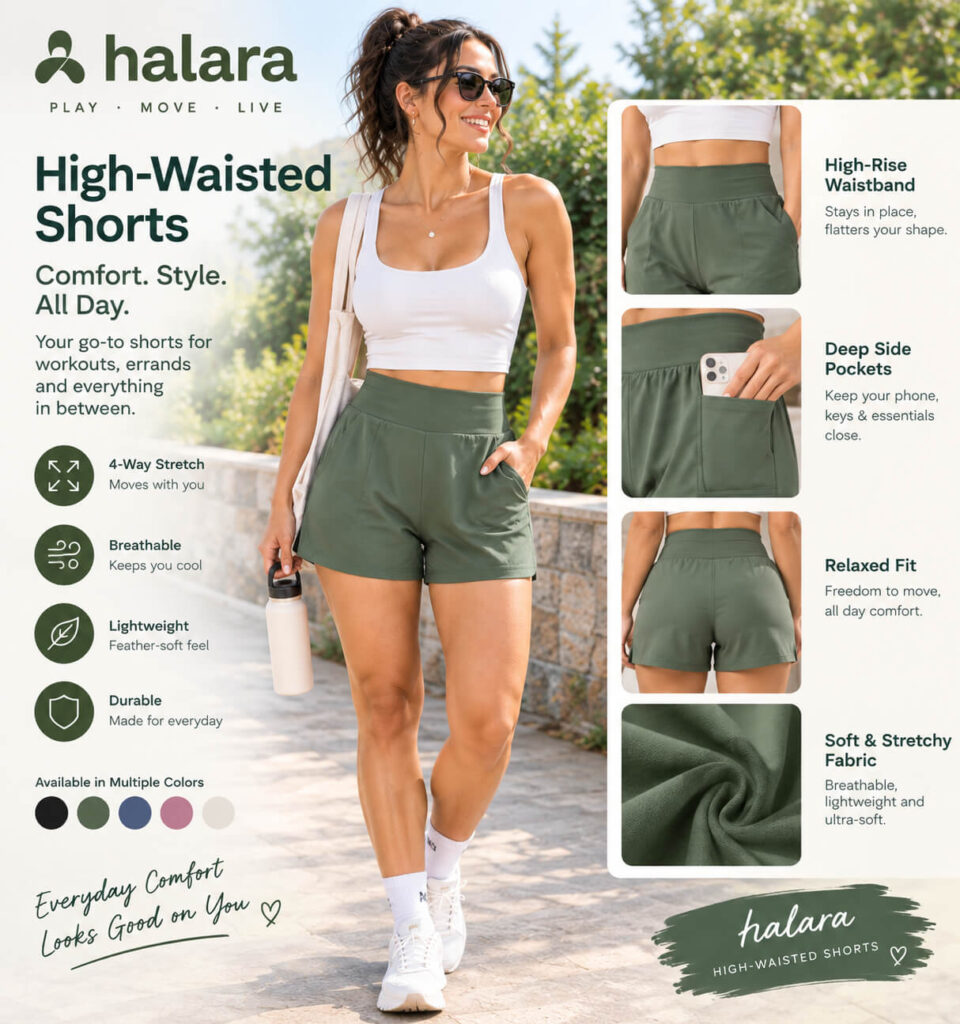
Halara is a direct-to-consumer athleisure brand founded in 2020, focused specifically on leggings, exercise dresses, skorts, and comfort-first basics, with (cite index=”40-1″>pricing generally in the $25-$60 range</cite>.
Zaful, based in Berlin but sourcing and manufacturing (cite index=”51-1″>mostly in China through an outsourced, marketplace-style model</cite>, covers a much broader catalog spanning (cite index=”46-1″>dresses, jackets, coats, hoodies, sweats, tops, bottoms, sets, swimwear, and accessories for both women and men</cite>. One comparison of Shein-adjacent alternatives specifically grouped Zaful alongside Cider and Romwe as brands that (cite index=”40-1″>”sit at similar pricing with a swim-strong assortment,” offering the closest like-for-like alternative for shoppers prioritizing Shein-level pricing and trend speed</cite>.
1. Price Comparison 💰
Pricing is genuinely comparable between the two — both sit toward the lower end of the fast-fashion spectrum. Halara runs (cite index=”40-1″>$25-$60</cite>, while Zaful is generally recognized in the same low-price tier as Shein and its adjacent competitors, often even lower on a per-item basis given its broader marketplace-style catalog.
Verdict: Neither brand has a meaningful price advantage over the other — both are built around aggressive, low-cost pricing as the core value proposition.
2. Quality Comparison 🧵
This is where the two brands start to diverge, though neither comes out looking premium.
Halara’s quality has been directly assessed by multiple long-term reviewers, with one describing it as (cite index=”38-1″>comparable to Amazon Essentials, sometimes worse</cite>, while another found Halara’s leggings specifically (cite index=”44-1″>sit in the same quality category as nicer athleisure brands like Aerie, a step above Target or Old Navy</cite>. The consistent theme is that Halara’s quality varies significantly by category — strong in leggings and structured pants, weaker in tops and accessories.
Zaful’s quality picture is more scattered and less consistent overall. Independent review aggregation found genuinely mixed feedback: one reviewer described (cite index=”55-1″>swimsuits as “relatively high quality,” a sentiment common among happy reviewers</cite>, while others reported (cite index=”49-1″>items looking nothing like the pictures used by Zaful, with garments running noticeably smaller than the labeled size</cite>. A broader review noted candidly that Zaful is (cite index=”51-1″>a marketplace-style platform where sourcing and manufacturing are outsourced, leading to fluctuations in quality and fulfillment times</cite> — meaning your experience can depend heavily on which specific seller or product line you’re ordering from.
Verdict: Halara’s quality, while inconsistent, is at least somewhat predictable by category (leggings and pants good, tops less so). Zaful’s marketplace structure makes quality feel more like a lottery — genuinely good for some categories (swimwear gets consistent praise) and genuinely poor for others.
3. Shipping and Customer Service 🚚
Halara ships from Asia with (cite index=”38-1″>standard shipping taking about 10 days to two weeks</cite>, and offers (cite index=”38-1″>free shipping over $59, with an $8 charge below that threshold</cite>.
Zaful’s shipping experience is more frequently and more severely criticized. Independent review aggregation found that Zaful holds (cite index=”52-1″>a 2.6-star Trustpilot rating from over 11,000 reviewers, with failed orders, shipping delays, and unresponsive customer support among the most common complaints</cite>. Multiple sources confirm standard international shipping (cite index=”53-1″>is lengthy, and customers needing an item by a specific date are advised to choose express shipping or order well in advance</cite>. One long-time reviewer specifically warned that (cite index=”47-1″>Zaful’s customer service consists largely of automated bot responses rather than real people</cite>.
Verdict: Shipping delays affect both brands to some degree, since both source overseas, but Zaful’s complaint volume and severity — particularly around unresponsive support — appears more pronounced than what’s typically reported for Halara.
4. Returns: Both Brands Have Real Friction, But in Different Ways
Halara’s return process has been widely documented as difficult, with (cite index=”38-1″>customers paying roughly $8 out of pocket for return shipping</cite>, plus broader reports of tracking disputes and partial refunds (covered in more depth in our dedicated return-experience article).
Zaful’s return policy carries its own well-documented friction. One review specifically warned that (cite index=”49-1″>Zaful claims to have free returns but won’t reimburse the shipping cost, and is notably slow to process returns while still expecting items shipped back within 7 days of receipt</cite>. Another source confirmed that (cite index=”52-1″>even when a customer pays for return shipping, Zaful only refunds the product cost — meaning the customer effectively pays for shipping twice</cite> (once outbound, once on return, with no reimbursement for either). It’s also worth noting Zaful specifically (cite index=”53-1″>excludes lingerie, swimwear, and underwear from returns except in cases of sizing, wrong item, or quality issues</cite> — a category exclusion Halara doesn’t appear to apply in the same way.
Verdict: Both brands make returns a genuine hassle. Zaful’s policy appears slightly more restrictive on paper (non-returnable categories, tighter return windows), while Halara’s complaints center more on customer service responsiveness and tracking disputes during the process.
5. Product Focus
Halara stays in its lane: athleisure and activewear-adjacent basics, which gives it a more consistent design language and a clearer sense of what it’s actually good at (leggings, structured pants, athletic dresses).
Zaful casts a much wider net — swimwear, dresses, outerwear, streetwear, accessories — which comes with the benefit of variety but also means quality and fit consistency are harder to predict across such a broad catalog.
Verdict: If you want a focused athleisure wardrobe, Halara’s narrower catalog is easier to shop with confidence. If you want swimwear or broader fashion variety and don’t mind more unpredictability, Zaful’s range is bigger, but comes with a wider spread of outcomes.
Final Verdict: Which Should You Choose?
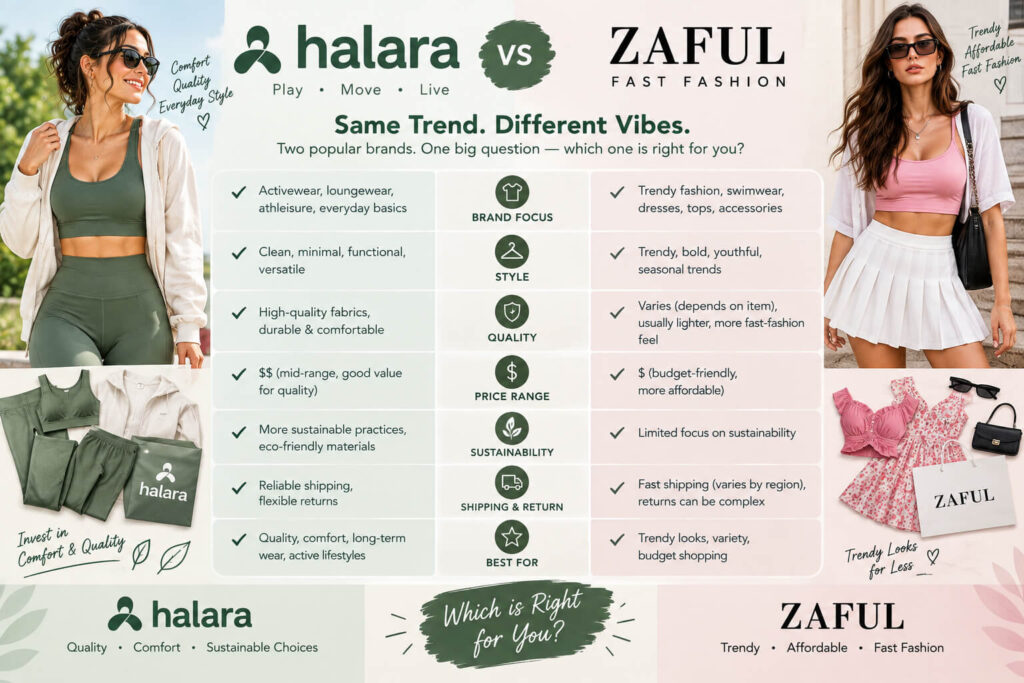
| Factor | Halara | Zaful |
|---|---|---|
| Price | $25-$60 | Similar low-cost range |
| Quality | Inconsistent by category, but somewhat predictable | Highly variable, marketplace-style unpredictability |
| Shipping | 10-14 days, known delays | Longer delays, more severe complaint volume |
| Customer service | Mixed, documented friction | Frequently criticized, bot-heavy support reported |
| Returns | ~$8 return shipping cost, tracking disputes reported | No shipping reimbursement, tighter return windows, some categories excluded |
| Best For | Shoppers who want a focused athleisure catalog | Shoppers wanting broader fashion/swim variety who accept more unpredictability |
Bottom Line: Neither brand is a premium pick, and both carry real, well-documented friction around shipping and returns. Halara’s narrower focus on athleisure makes its quality and fit more predictable category to category. Zaful offers a much wider catalog — genuinely good for swimwear specifically — but its marketplace-style sourcing model and more severe customer service complaints suggest a slightly bumpier ride overall. If you’re choosing between the two purely on reliability, Halara’s more focused, better-documented review base gives you a better sense of what you’re actually getting.