“Yoga pants” and “leggings” get used interchangeably a lot, but Halara actually treats them as genuinely different categories — and understanding that difference is the key to picking the right pair. This guide covers what separates Halara’s yoga pants from its leggings, the best styles for actual practice versus everyday wear, and what independent reviewers found after real testing, based on brand product guidance and reviews current as of mid-2026.
Quick Overview: Halara Yoga Pants
| Detail | Info |
|---|---|
| Key fabric | SoftlyZero™ — double-brushed microfiber, buttery soft, breathable |
| Best for hot yoga | SpeedWave™ or moisture-wicking styles instead of standard SoftlyZero™ |
| Popular silhouettes | Wide-leg, flare, barrel-leg, high-waisted straight styles |
| Price range | $28–$48 |
| Sizing | XS–3X |
Yoga Pants vs. Leggings: What’s Actually the Difference?
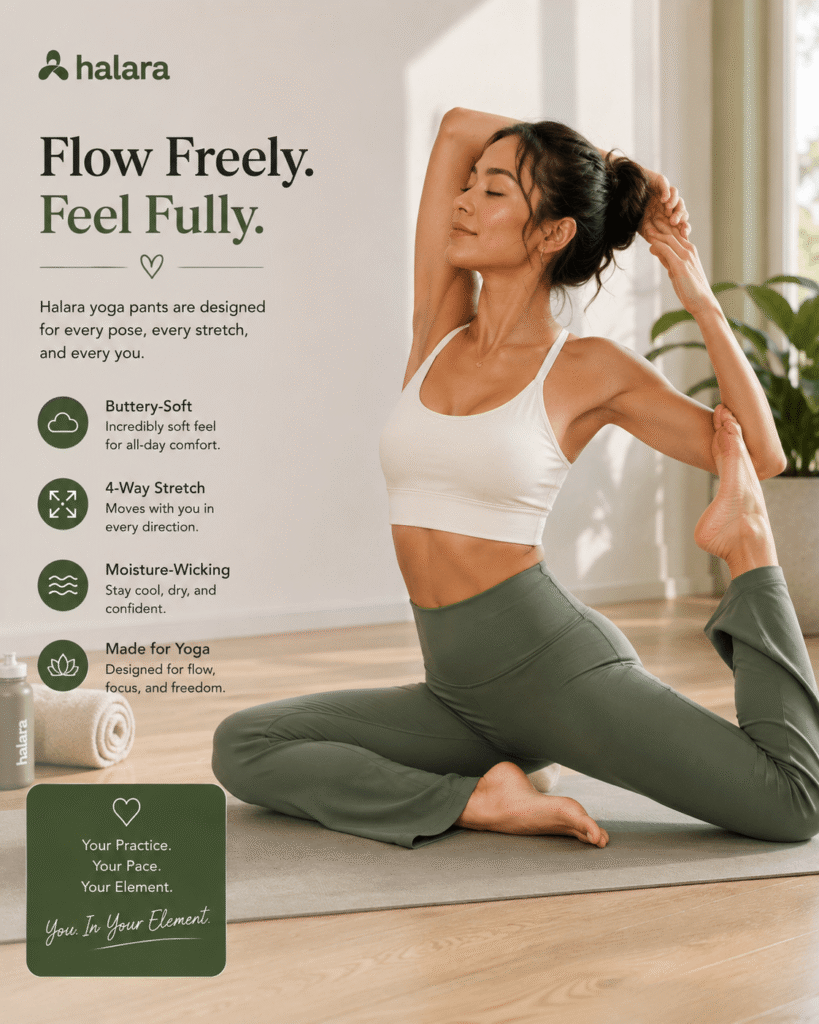
According to Halara’s own product guidance, this distinction matters more than it might seem. <cite index=”63-1″>”Yoga pants” is a broad term that can include leggings, but often specifically refers to bottoms designed for yoga practice, prioritizing softness, breathability, and freedom of movement over compression</cite> — and <cite index=”63-1″>these styles may include wide-leg or flare cuts designed to accommodate yoga poses, whereas standard leggings tend to be more fitted and compression-focused</cite>.
This is a genuinely useful distinction if you’ve ever bought a legging expecting yoga-pant comfort and found it too tight for deep stretches, or bought a wide-leg pant expecting compression support and found it too loose for actual practice.
What Fabric Should You Choose?
Halara’s own guidance breaks this down clearly by activity type. For most yoga environments, <cite index=”63-1″>SoftlyZero™ fabric — a double-brushed microfiber construction that’s buttery soft, breathable, and stretchy — is the primary fabric used and works well for most practice conditions</cite>. But for hot yoga specifically, the brand recommends stepping up to <cite index=”63-1″>quick-dry yoga pants or leggings in SpeedWave™ or other moisture-wicking fabrics</cite>, since SoftlyZero™, while breathable, isn’t engineered for the same level of heavy sweat management.
Quick rule of thumb: standard studio yoga, slow flows, and restorative classes → SoftlyZero™. Hot yoga, Bikram, or high-sweat sessions → SpeedWave™ or similar moisture-wicking styles.
Best Halara Yoga Pants by Style
1. Wide-Leg Yoga Pants
Halara’s own collection description positions these specifically for practice: <cite index=”61-1″>designed for comfort and flexibility, perfect for stretching, bending, and flowing movements</cite>. The wide-leg cut avoids any fabric restriction through deep poses, making this the closest thing to a “traditional” yoga pant in Halara’s lineup.
2. Flare Yoga Pants
A close cousin to the wide-leg style, Halara’s flare yoga pants are built with <cite index=”64-1″>stretchy fabric offering comfort and flexibility during yoga or other activities</cite>, and are specifically marketed as <cite index=”64-1″>versatile enough to wear for exercise or casual outings alike</cite> — a good pick if you want one pair that works both on and off the mat.
3. Barrel-Leg Styles
Part of the broader athleisure trend toward relaxed silhouettes, per Halara’s own guidance <cite index=”63-1″>wide-leg trousers, flare leggings, and barrel-leg styles have grown in popularity as alternatives to standard fitted yoga pants for casual and everyday wear beyond the studio</cite> — though the brand is upfront that <cite index=”63-1″>for actual yoga practice, fitted styles with four-way stretch remain the practical standard</cite>.
4. High-Waisted Fitted Styles
For practice-focused use where you want more compression and less fabric movement during inversions or transitions, Halara’s fitted, high-waisted yoga leggings offer more structure than the wide-leg and flare options, closer to a traditional legging while still using the softer SoftlyZero™ fabric base.
What Independent Testing Found
A reviewer who tested Halara for more than a year across six different styles — including leggings, work pants, and jeans — gave the brand’s stretch fabric genuine credit for versatility, noting that <cite index=”66-1″>the stretch makes items so much more comfortable than a traditional structured pant, while still maintaining a polished look</cite>. This same reviewer’s overall take was that <cite index=”66-1″>Halara’s leggings, shorts, and active dresses are soft, stretchy, and thoughtfully designed</cite>, though she flagged a few minor, non-dealbreaking quirks: <cite index=”66-1″>inseams that run short on taller frames, slight pilling after multiple washes, and occasional shifting during more intense movement</cite>.
Her direct comparison to premium yoga-specific brands is a useful data point for expectations: <cite index=”66-1″>brands like Alo Yoga and Lululemon offer a bit more compression and durability in the activewear space, though not so much that it feels necessary to splurge over Halara</cite>.
Beyond the Studio: Everyday Yoga Pants
One of Halara’s clearer selling points is that its yoga pants aren’t purely gym-bound. The brand’s own positioning describes the collection as designed <cite index=”63-1″>for slow flows, deep stretches, and studio-to-street plans</cite>, recommending pairing pieces <cite index=”63-1″>with shirts, fitted tops, blouses, or relaxed knits for effortless outfits that still feel distinctly you</cite>. Real customer feedback backs this up — one long-time shopper on Trustpilot specifically said her Halara yoga pants, jeans, and trousers have become <cite index=”62-1″>the only pants she wears now, praising their softness, comfort, value, and quick-drying properties</cite>.
Choosing the Right Pair for You
- Practicing yoga regularly (studio or home)? Fitted, high-waisted SoftlyZero™ styles give you the compression and stability you need for poses.
- Doing hot yoga or a heavy-sweat practice? Look specifically for SpeedWave™ or other moisture-wicking labeled styles instead of standard SoftlyZero™.
- Want something for yoga and everyday wear? Wide-leg or flare styles bridge both worlds without looking overtly “workout.”
- Tall frame? Check inseam length carefully, since at least one long-term reviewer specifically flagged shorter inseams as a minor recurring issue.
- Prioritizing durability over softness? If you’re doing frequent, intense practice, know going in that premium brands offer somewhat more compression and durability — though the gap may not justify the price difference for casual or moderate use.
Frequently Asked Questions
What’s the difference between Halara yoga pants and leggings? Yoga pants prioritize softness and freedom of movement, often in wide-leg or flare cuts, while leggings are more fitted and compression-focused. Both can technically be worn for yoga, but they serve slightly different purposes.
What fabric are Halara yoga pants made from? Primarily SoftlyZero™, a double-brushed microfiber fabric that’s soft, breathable, and stretchy. For hot yoga specifically, SpeedWave™ or other moisture-wicking fabrics are recommended instead.
Are Halara yoga pants good for actual yoga practice, or just casual wear? Both, depending on the style. Fitted, high-waisted styles work well for practice, while wide-leg and flare styles are more casual-focused, though still comfortable enough for slower, less compression-dependent practice like restorative yoga.
Do Halara yoga pants run true to size? Generally well-reviewed for comfort, though at least one long-term tester noted inseams can run short on taller frames — worth checking length details if you’re tall.
Is Halara a good alternative to Lululemon or Alo Yoga for yoga pants? For most casual to moderate yoga practice, yes — reviewers note the compression and durability gap versus premium brands isn’t large enough to make the price difference feel necessary for most users.
Final Thoughts
Halara’s yoga pants collection benefits from a genuinely useful design distinction the brand makes clear in its own guidance: yoga pants prioritize movement and softness, while leggings prioritize compression. Wide-leg and flare styles in SoftlyZero™ fabric are the most versatile picks for studio-to-street wear, while fitted, high-waisted styles work best for focused practice, and SpeedWave™ options are worth seeking out specifically for hot yoga. Independent long-term testing backs up the brand’s comfort claims, with only minor, manageable quirks — making Halara a solid, budget-friendly choice for most yoga practitioners who don’t need premium-brand-level compression.
Related Reading
- Best Halara Leggings for Running: Top Picks Reviewed
- Halara Fabric Quality: What Are Their Clothes Really Made Of?
- Halara Athleisure for Work: Office-Appropriate Outfit Ideas
Disclosure: This guide is based on publicly available brand product information and independently gathered customer and editorial reviews as of mid-2026. It is not sponsored by Halara.