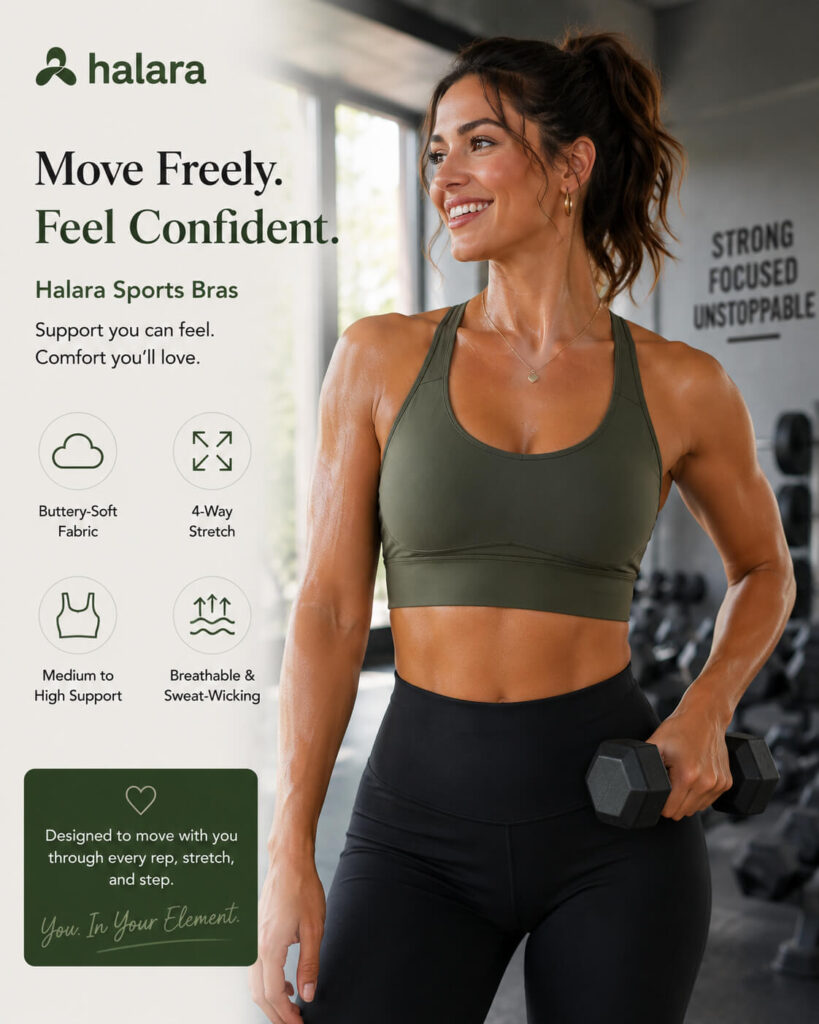
Quick answer: The right Halara sports bra depends on the movement you plan to do. Low-support styles suit yoga, Pilates and everyday wear; medium support is usually more appropriate for strength training, cycling and dance; running, jumping and HIIT generally call for high support. Do not rely on the product photo alone—check the support label, size chart, cup coverage and return eligibility for the exact style.
Last reviewed: October 2026. Product names, fabrics, prices and availability can change. This independent guide explains how to evaluate the current options rather than declaring one universal “best” bra.
Fast buying checklist
- Match the support level to your highest-impact movement.
- Check the chart for the exact product; sizing is not universal.
- Look for a level band, full cup coverage and straps that do not dig.
- Confirm whether padding is removable or sewn in.
- Read recent reviews from shoppers with similar measurements.
- Review the current return policy before removing tags or hygienic seals.
Halara sports bras by support level
| Support | Usually suited to | What to look for |
|---|---|---|
| Low | Yoga, Pilates, walking, mobility and lounging | Flexible band, soft fabric and comfortable coverage |
| Medium | Strength training, cycling, hiking and dance | Firmer band, wider straps and more structured cups |
| High | Running, HIIT, jumping and court sports | Strong compression and/or encapsulation, secure band and adjustable support |
| Built-in bra top | Everyday wear and some low-impact sessions | Check whether the internal shelf or cups provide enough support for your body |
These categories are a starting point, not a guarantee. Breast size, tissue, pace, range of motion and personal comfort can change how much support you need. If you feel painful movement or repeatedly adjust the bra, move up a support level.
How a Halara sports bra should fit
Start with the band
The band supplies much of the support. It should sit level around the rib cage and remain in place when you raise your arms. A band that rides up is often too loose; one that restricts breathing or causes pain is too tight.
Check cup coverage
Bend forward, twist and reach overhead. Breast tissue should remain contained without spilling at the neckline or sides. Gaping can indicate excess space or a shape mismatch, while compression that flattens painfully may mean the cup area is too small.
Test the straps
Straps should stay in place without carrying the entire load. Adjustable straps make fine-tuning easier, but tightening them cannot compensate for an overly loose band.
Move before deciding
Try a squat, overhead reach, forward fold and a few brisk steps. For a running or HIIT bra, add a light bounce test. Watch for rolling, rubbing, shifting cups or an unstable neckline.
Choosing a Halara bra for your workout
Yoga and Pilates
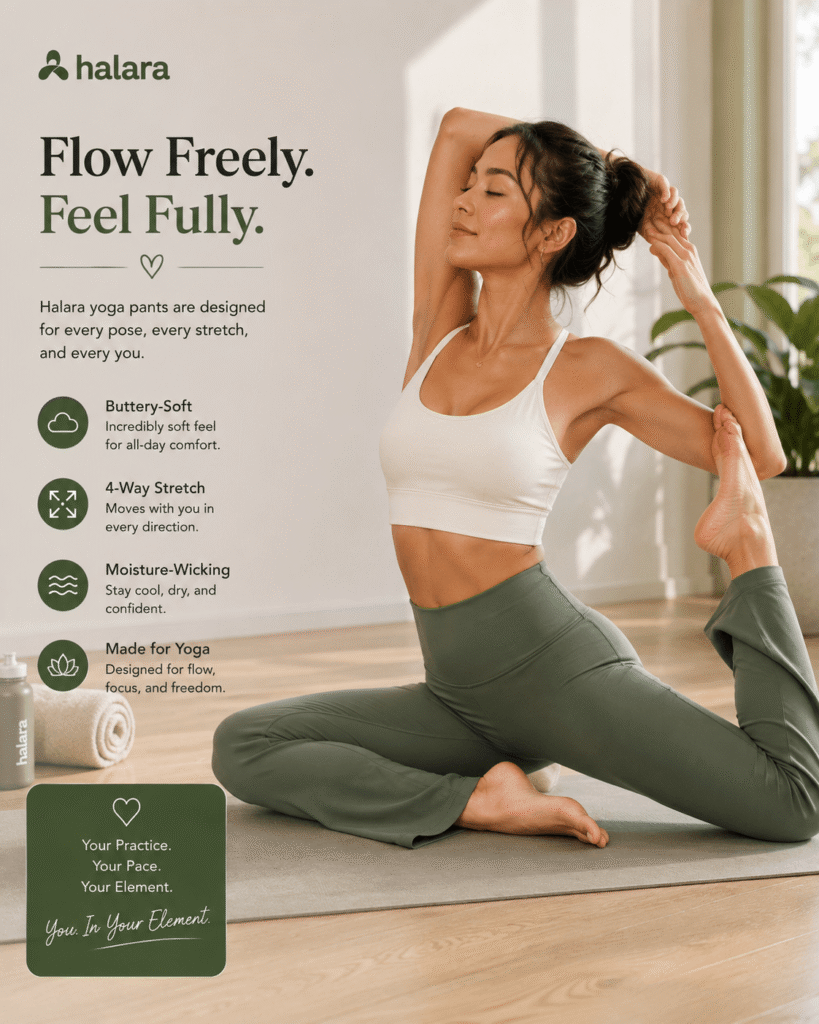
Prioritize flexibility, secure coverage during forward folds and seams that do not irritate you on the mat. A low-support bra may be sufficient, although fuller-bust shoppers may prefer medium support. See our detailed low-impact sports bra guide.
Strength training and cycling
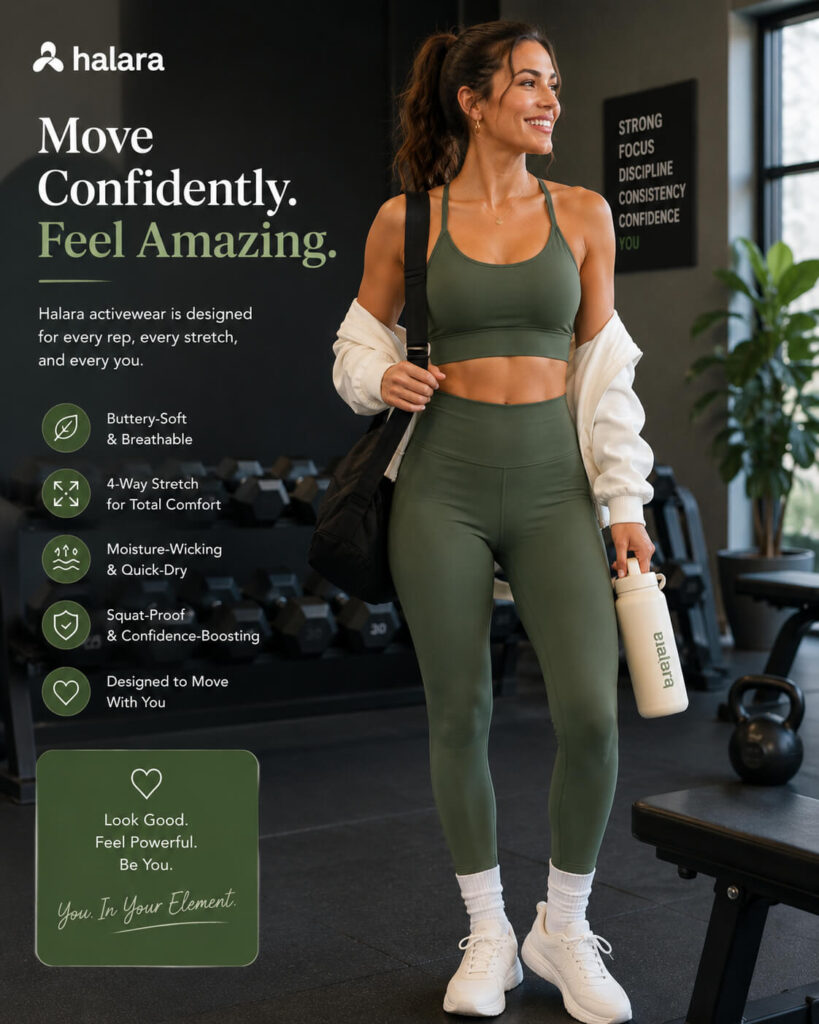
Medium support is a practical starting point. Look for a stable underband and straps that remain comfortable through presses, rows and longer rides. If the workout includes repeated jumps or sprints, consider high support instead.
Running and HIIT
Choose a product explicitly described for high-impact use. Strong compression alone is not automatically better; the bra must also fit your band and cup shape. Adjustable straps, a secure closure and structured cups can improve control. Read our high-impact sports bra guide before buying.
Everyday wear
Soft low-support bras and built-in-bra tops may feel convenient for daily wear, but comfort is individual. Avoid wearing a highly compressive exercise bra all day if it causes pain, pressure or skin irritation.
What to verify on the current Halara product page
Halara has used names such as SoftlyZero™, Cloudful™, SpeedWave™ and UltraSculpt™ across activewear products, but collections can change. Treat a fabric or collection name as a clue—not proof that a bra will suit your activity.
- Support label: confirm low, medium or high impact.
- Fabric: check the exact fiber percentages and care instructions.
- Cup construction: identify removable pads, molded cups or separate shaping.
- Adjustability: look for adjustable straps, hooks or a front closure if needed.
- Coverage: compare neckline and side coverage with your intended movement.
- Size range: use the exact chart rather than your usual top size.
- Recent reviews: prioritize specific comments about band fit, cup coverage and activity.
Halara sizing tips
- Measure snugly around the rib cage directly below the bust.
- Measure around the fullest part of the bust without compressing the tissue.
- Compare both measurements with the chart for the exact bra.
- If the product uses letter sizing, make sure both band and bust measurements fall within the same size.
- If you are between sizes, use the product’s fit notes and recent reviews; do not automatically size down for more support.
Size labels are not consistent across every style or brand. A good fit matters more than the letter printed on the tag.
Alternative sports-bra retailer
Compare WANAYOU sports bras
If the current Halara selection does not match your size, closure or support needs, WANAYOU offers front-zip, racerback and other sports-bra styles. Use the same fit checklist above and verify the listed support level, size chart, padding and return terms before ordering.
This button opens the retailer’s current sports-bra collection. Prices and availability can change.
Common buying mistakes
- Choosing by appearance without checking the support rating.
- Assuming every built-in bra is suitable for running.
- Using tighter straps to compensate for a loose band.
- Buying by a general brand size instead of the product-specific chart.
- Ignoring return exclusions for intimate apparel.
- Calling a bra “high support” only because it feels tight.
Frequently asked questions
Which Halara sports bra is best for running?
Start with a style currently labelled for high-impact activity, then verify band stability, cup containment and comfort through a bounce test. A product name alone cannot guarantee the right support.
Are Halara built-in-bra tops enough for HIIT?
Usually not unless the exact product is explicitly designed for high-impact movement and passes your movement test. Many built-in-bra tops are intended for everyday or lower-impact use.
Do Halara sports bras run true to size?
Fit can vary by style and body shape. Use the current chart for the exact item and read recent reviews from shoppers with similar measurements.
Can I wear a low-support bra all day?
Yes, if it remains comfortable and does not cause rubbing, painful pressure or breathing restriction. Change it if discomfort develops.
How often should I replace a sports bra?
There is no universal date. Replace it when the band no longer stays secure, the fabric remains stretched, straps cannot be adjusted effectively or support has noticeably declined.
Bottom line
The best Halara sports bra is the one that matches your activity and fits your body securely. Begin with the support category, then evaluate the band, cups, straps, fabric and return terms for the exact product. For high-impact movement, prioritize control and fit over softness or appearance; for yoga and daily wear, comfort and mobility may matter more.
Related reading
- Low-Impact Sports Bras: Fit and Best Uses
- Medium-Impact Sports Bras Guide
- High-Impact Sports Bras Guide
- How to Choose a Yoga Sports Bra
Affiliate disclosure: This independent guide contains an affiliate link. If you purchase through it, we may earn a commission at no extra cost to you. Product inclusion does not guarantee suitability; always verify the current specifications and fit.