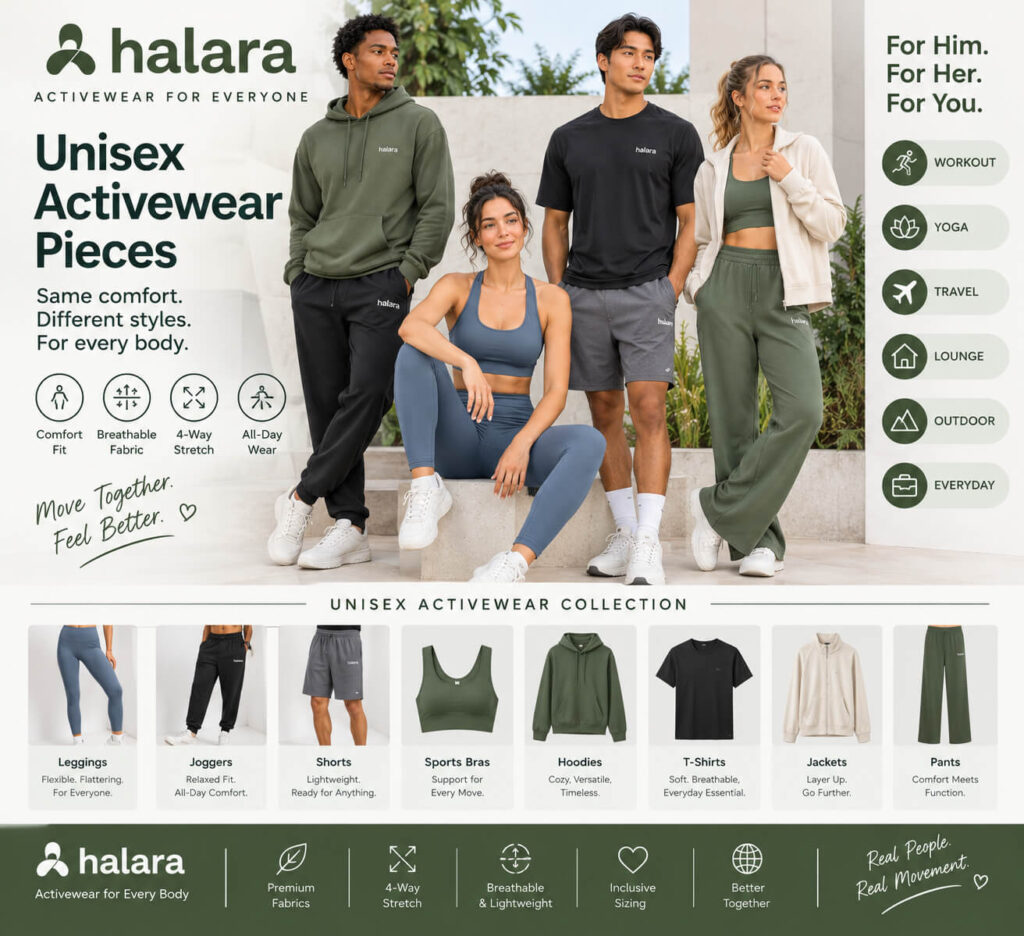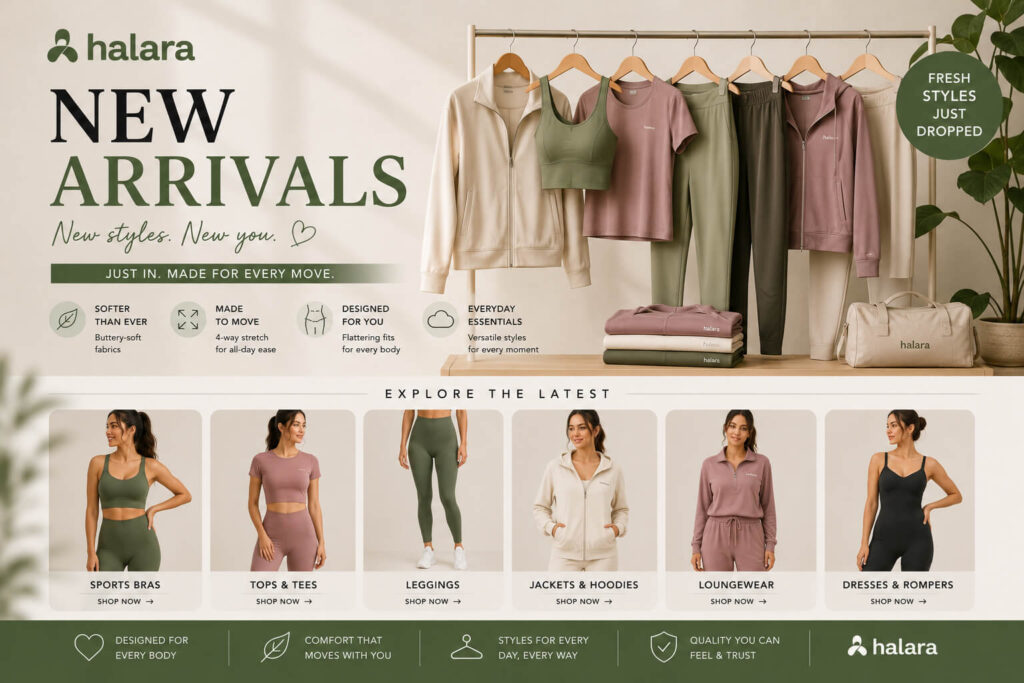
Halara markets itself around comfort, affordability, and inclusivity — but sustainability doesn’t typically make it into the brand’s own messaging in a detailed way. That gap has prompted a wave of independent sustainability evaluations over the past couple of years, and the findings are remarkably consistent across sources. Here’s an honest look at what’s actually known about Halara’s materials, labor practices, and environmental footprint.
Materials: Almost Entirely Synthetic
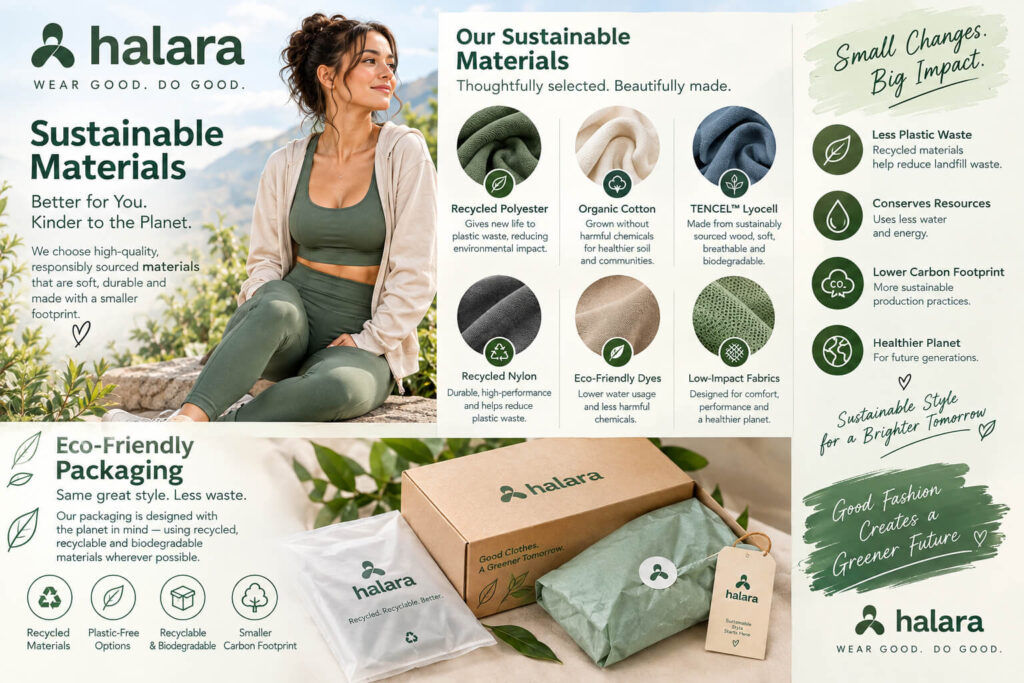
Across multiple independent reviews, the material picture is consistent. One detailed sustainability assessment found that (cite index=”39-1″>Halara’s products are made almost entirely from conventional, petroleum-based synthetic fabrics such as polyester, nylon, and spandex, with no evidence of the brand using recycled or sustainable alternatives</cite>. These materials (cite index=”39-1″>contribute to fossil fuel demand, require significant energy to produce, and release microplastics into waterways with every wash</cite>.
A separate review noted that (cite index=”36-1″>Halara occasionally uses viscose, and the chemical process used to convert wood pulp into viscose can be environmentally damaging — without certifications, there’s no way to confirm the viscose is being sourced sustainably</cite>. Another environmental review put it plainly: (cite index=”35-1″>Halara primarily uses synthetic materials like polyester, which are not eco-friendly</cite>, and pointed out that switching to (cite index=”35-1″>organic cotton, recycled polyester, or hemp would meaningfully reduce the brand’s environmental impact</cite> if it chose to.
Certifications: None That Are Verifiable
This is the area where independent evaluations are most unanimous. A detailed review outlined the major sustainability certifications that would normally provide third-party verification — (cite index=”43-1″>Fair Trade certification for labor practices, GOTS for organic materials, Bluesign for chemical safety, B Corp for overall social and environmental performance, and Climate Neutral certification for carbon footprint</cite> — and found no evidence Halara holds any of them. Another assessment reached the same conclusion, noting Halara offers (cite index=”36-1″>no factory list, no audits, no certifications, no disclosed supply chain, and no ownership structure published in one place</cite>.
One nuance worth noting: a separate source pointed out that (cite index=”42-1″>Halara has referenced certifications like GRS (which validates recycled materials) and Fair Trade Certified in some contexts, but it remains unclear which specific products actually carry these certifications</cite> — meaning even where the brand gestures toward certification language, it’s not tied to verifiable, product-level proof.
Labor Practices and Manufacturing Transparency
Halara’s manufacturing footprint spans several countries with documented labor-risk histories. One review noted that (cite index=”41-1″>Halara’s manufacturing factories are located in countries known for weaker labor laws, including Vietnam, China, Hong Kong, and the Philippines, raising potential concerns about working conditions</cite>. A separate evaluation found that (cite index=”35-1″>Halara hasn’t released any transparency report about worker conditions or fair wage practices</cite>, which many ethical brands in this space do publish.
One source did note that (cite index=”42-1″>Halara claims to ensure fair wages and audit its suppliers, but has not published a supplier list or wage reports</cite> to back that claim up — so the gap isn’t necessarily that the company makes no claims at all, but that those claims aren’t independently verifiable.
A comparison to a well-known fast-fashion giant is worth including here, since it’s come up in more than one independent review: one evaluation concluded that (cite index=”36-1″>ethically and environmentally, Halara sits in the same category as Shein — both outsource production and materials, make vague sustainability commitments, and disclose nothing checkable about their factories</cite>, though it’s worth noting Halara’s production scale doesn’t come close to matching Shein’s.
The “Greenwashing” Concern
Several independent reviews use this term directly. One noted that (cite index=”40-1″>in a world quick to claim the sustainable label, Halara’s efforts appear to be more about marketing than genuine environmental commitment</cite>. Another, evaluating the brand with a letter-grade system, gave Halara (cite index=”39-1″>a D for both transparency and sustainability, citing the complete lack of supplier lists, third-party audits, or ethical certifications, combined with heavy reliance on virgin synthetic materials and no apparent environmental goals or circularity programs</cite>.
What Halara Does Get Some Credit For
It’s worth including the more balanced points that show up across these reviews, since the picture isn’t entirely one-sided:
- Cruelty-free manufacturing: Multiple sources note that (cite index=”40-1″>Halara avoids animal-based textiles entirely</cite>, since its catalog is built on synthetic fibers rather than wool, leather, or down.
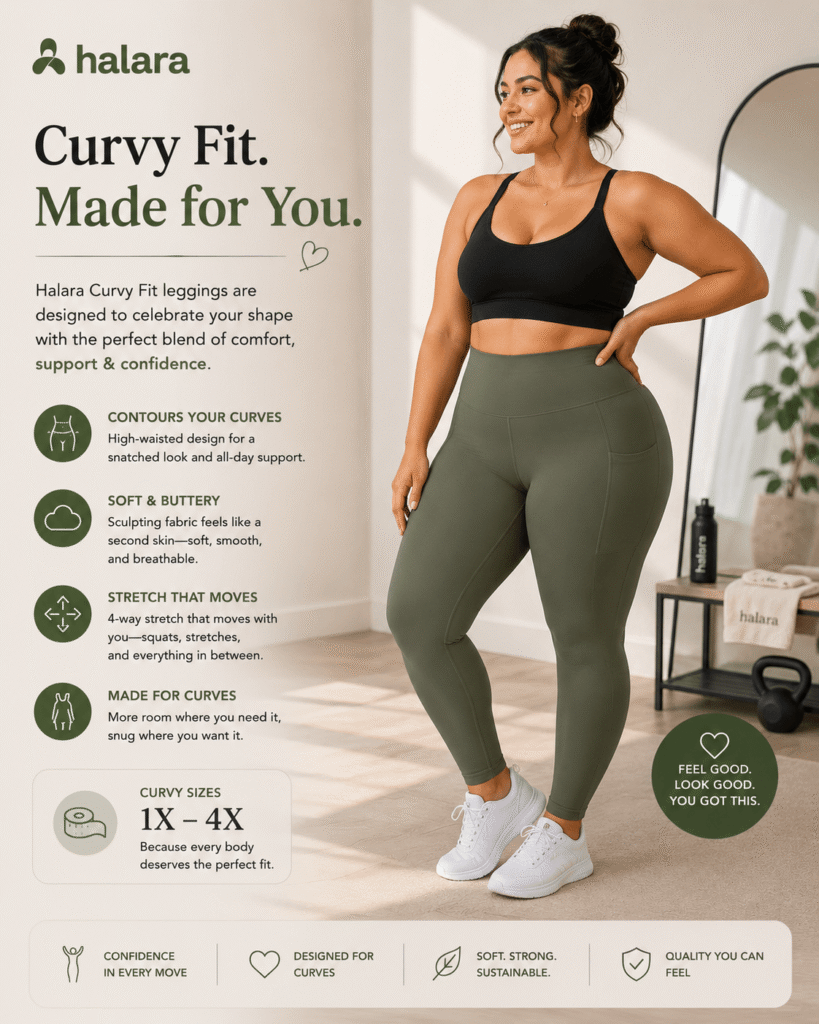
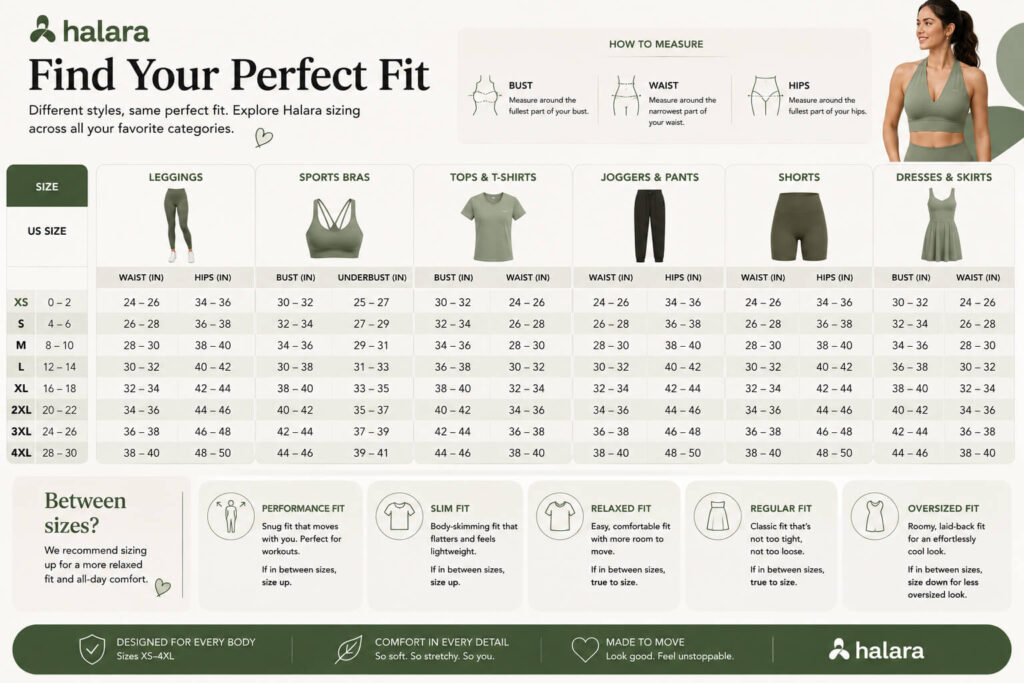
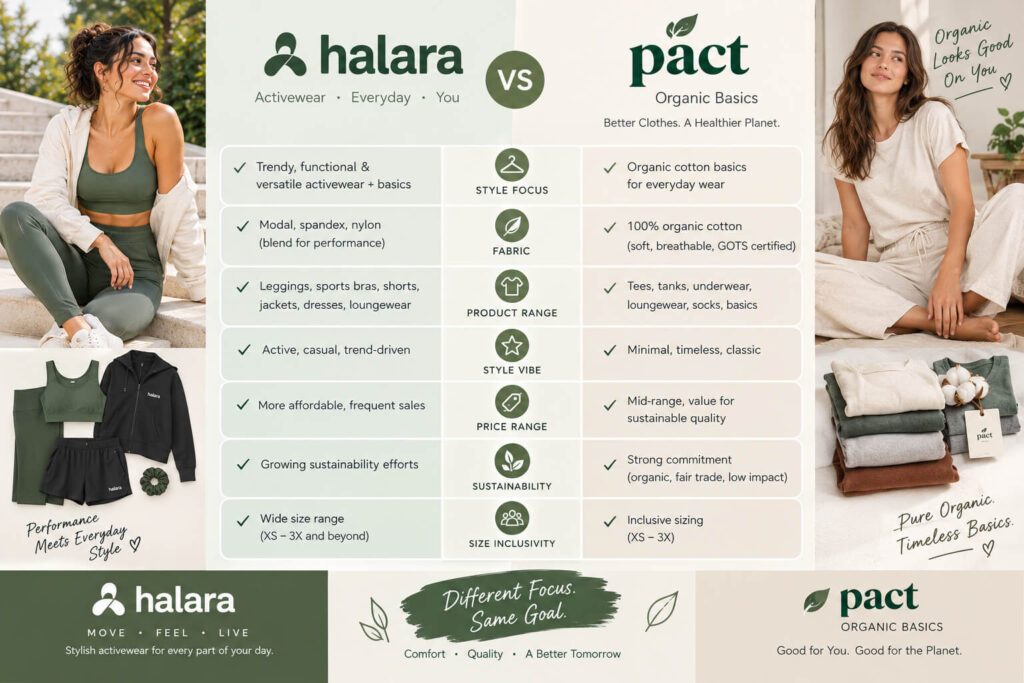
- Size inclusivity: One review pointed out that (cite index=”41-1″>Halara’s sizing spans from XS up to XXXL, with a dedicated Plus + Curve category</cite> — while size inclusivity isn’t itself an environmental metric, it is sometimes counted as part of a brand’s broader social responsibility profile.
- Directional language, if not proof: At least one source noted Halara (cite index=”42-1″>states a mission to combine accessibility with sustainability and references exploring lower-impact fabrics and production methods</cite>, even though this hasn’t yet translated into verifiable certifications or public data.
How This Compares to Genuinely Sustainable Alternatives
If sustainability is a priority for you, independent reviews consistently point toward the same handful of alternatives. Girlfriend Collective is the most frequently recommended, described as using (cite index=”38-1″>sustainable fabrics like recycled polyester and ECONYL, across leggings, sports bras, shorts, and tanks</cite>, with (cite index=”37-1″>transparent, published manufacturing processes and a strong commitment to fair labor practices and safe working conditions</cite>. Patagonia and Outdoor Voices are also commonly cited for their published environmental commitments and use of recycled materials.
The Bottom Line
Across a wide range of independent evaluations — spanning eco-fashion blogs, sustainability review sites, and comparison articles — the conclusion is remarkably consistent: Halara has not published the supplier information, third-party certifications, or labor transparency reports that would let an outside party verify any sustainability claims. Its material base leans almost entirely on synthetic fabrics (polyester, nylon, spandex) without documented recycled or organic alternatives, and its “sustainability” positioning is generally characterized by reviewers as marketing language rather than a substantiated commitment.
That doesn’t necessarily mean Halara is worse than the fast-fashion norm — it means it hasn’t done the work to prove it’s better, and multiple independent reviewers have specifically flagged that absence of verification as itself the finding. If sustainability and supply chain transparency are important factors in your shopping decisions, it’s worth treating Halara the same way you would any other fast-fashion brand without third-party certification, and considering a more transparent alternative for the pieces where that matters most to you.