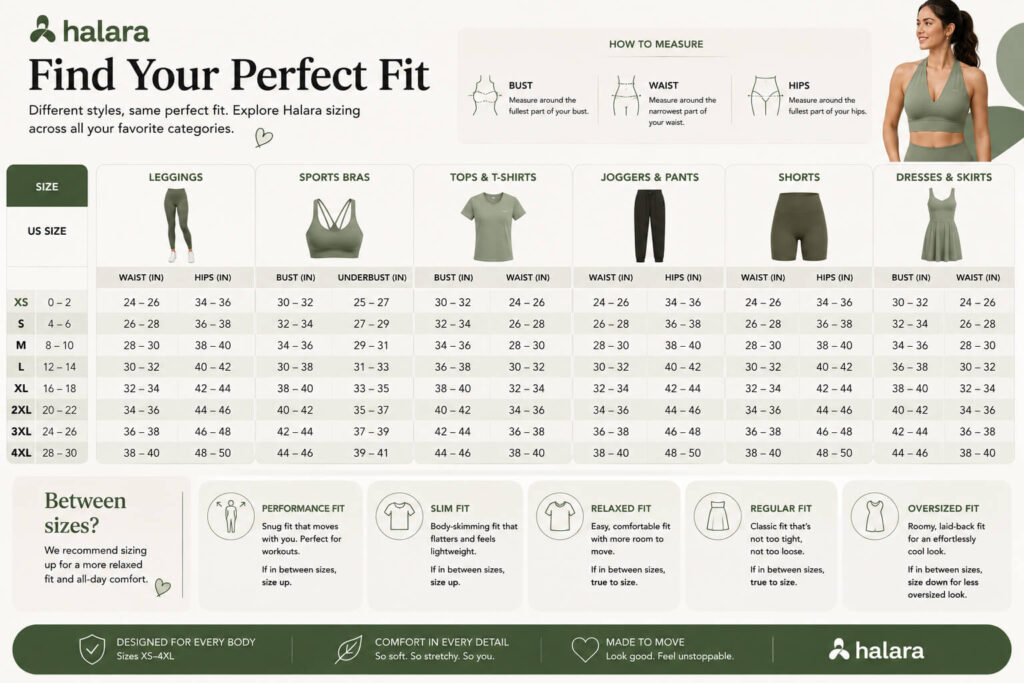
If there’s one question that comes up more than any other before ordering from Halara, it’s this: what size should I actually get? The honest answer is that it depends heavily on the category. Halara doesn’t run consistently small or consistently big across its entire catalog — fit varies by item type, body shape, and even by specific style within the same category. Here’s a detailed, category-by-category breakdown pulled from aggregated customer reviews and independent testing.
The Short Answer
There’s no single universal rule, but the most consistent pattern across reviews is this: (cite index=”68-1″>for most items, especially if you’re midsize or curvy, ordering one size up from your usual is the safest bet</cite>. Beyond that general guideline, fit behavior splits clearly by category.
1. Leggings and Pants: Tends to Run Small
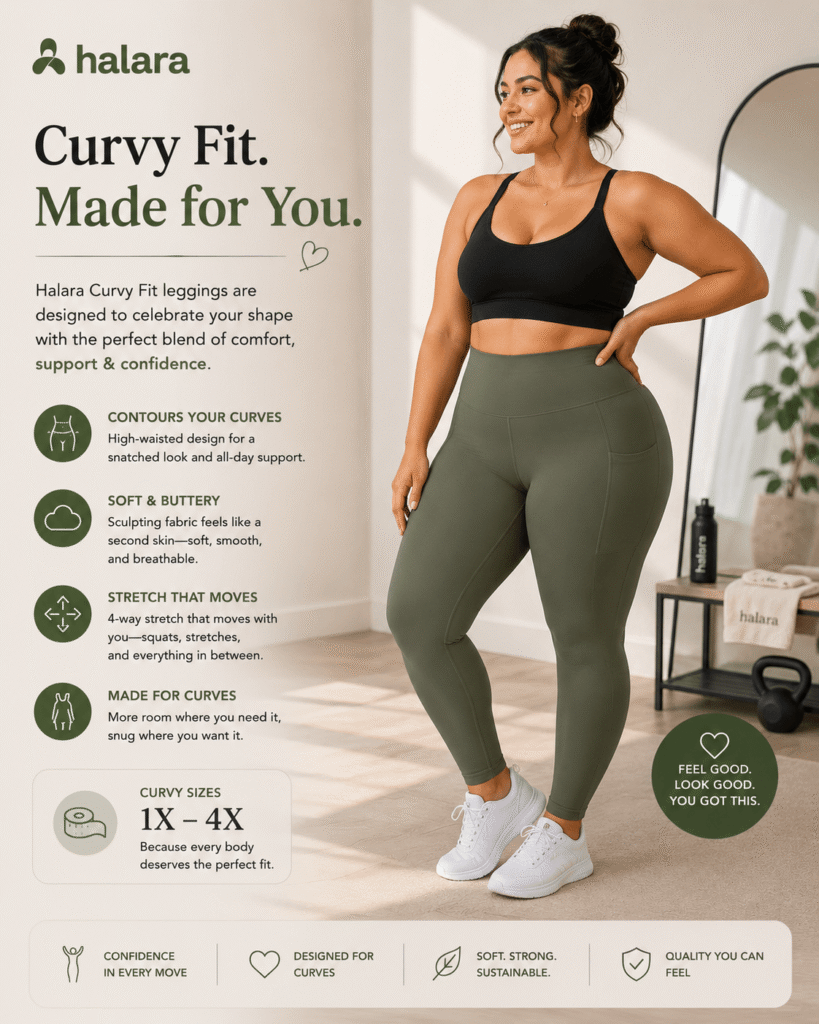
This is the category with the most consistent “runs small” feedback. (cite index=”68-1″>Leggings often run small, particularly in the waist — the compression is real, and sizing can cut in if you stick to your standard size</cite>. Other review roundups echo this, noting that (cite index=”70-1″>pants and leggings, in particular, can run small</cite>, with many customers suggesting sizing up for anything with a snug, compressive fit.
Recommendation: Size up if you prefer a comfortable, non-compressive feel. Stick to your usual size only if you specifically want a tight, sculpting fit.
2. Dresses and Skirts: Mixed, But Often Short in Length
Length is the bigger issue here more than width. (cite index=”68-1″>Dresses and skirts tend to run short, and for taller shoppers (5’7″ and above), mini lengths can end up feeling more like micro lengths</cite>.
On width and overall fit, results are more mixed. Some testers found true sizing worked well; others found specific styles ran small. One reviewer testing a bestselling dress style found it (cite index=”65-1″>ran small and fit too tightly for a midsize or curvy frame</cite>. Independent testers have also flagged that popular tennis and crossover skirt styles can run (cite index=”67-1″>very cropped and tight</cite>, more so than product photos suggest.
Recommendation: If you’re tall, check the specific length measurements rather than relying on “mini” or “midi” labels. If you’re midsize or curious about fit around the hips and bust, read reviews for that exact style before assuming true-to-size.
3. Tops: Generally True to Size, But Inconsistent Support
Tops get a more mixed verdict than leggings. Broader review aggregation suggests (cite index=”68-1″>tops are generally true to size, though support in built-in bras varies significantly by style</cite>. However, individual testing tells a slightly different story — one detailed reviewer found a specific crop top ran small enough that (cite index=”67-1″>their usual medium fit more like a small, requiring a size-up to avoid a skin-tight fit</cite>.
Recommendation: Treat tops as true-to-size as a starting point, but check reviews for the specific style, especially with built-in bra support or fitted/cropped cuts, since these vary the most.
4. Plus-Size Items: Runs Small, With an Added Cost Concern
This is one of the clearest patterns in the data. A reviewer who wears a size 14 and extensively tested plus-size Halara pieces concluded plainly: (cite index=”65-1″>everything runs at least one size small for plus sizes, so sizing up is essential</cite>.
There’s also a pricing wrinkle worth knowing about: the same reviewer found that (cite index=”65-1″>a plus-size version of a legging style cost $20 more than the identical straight-size version</cite> — a pricing gap sometimes referred to as a “fat tax.” If you’re shopping plus sizes, it’s worth comparing straight-size and plus-size listings directly, since pricing isn’t always equivalent for the same product.
5. Petite and Tall Body Types
Fit satisfaction here depends heavily on your height:
- Petite shoppers tend to have the best experience overall, since (cite index=”68-1″>shorter inseams and hemlines often fit petite frames perfectly without needing any tailoring</cite>.
- Tall shoppers face more friction, frequently reporting (cite index=”68-1″>issues with torso length in bodysuits and skirt length falling shorter than expected</cite>.
Recommendation: Petite shoppers can generally trust standard sizing more. Tall shoppers should specifically check for “tall” length options where available, and read reviews from other tall customers before ordering dresses, skirts, or bodysuits.
Why the Inconsistency Happens
A few factors help explain why Halara sizing isn’t uniform:
- Fabric composition varies by product line (compression leggings vs. relaxed tops vs. stretch dresses), which changes how “true to size” feels in practice.
- Body shape interacts differently with different cuts — for example, plus-size customers have noted that (cite index=”68-1″>pattern scaling sometimes doesn’t fully account for deeper curves, leading to fit issues in the hip and bust areas</cite> even when the size label matches.
- Rapid catalog expansion across hundreds of styles means quality control on sizing consistency is harder to maintain than it would be with a smaller, more curated catalog.
Quick Reference: Halara Sizing Cheat Sheet
| Category | General Fit Tendency | Sizing Tip |
|---|---|---|
| Leggings/Pants | Runs small, especially in waist | Size up for comfort fit |
| Dresses/Skirts | Runs short in length | Check exact length if tall |
| Tops | Generally true to size | Check reviews for cropped/fitted styles |
| Plus-size items | Runs small (at least 1 size) | Size up; compare pricing to straight sizes |
| Petite frames | Fits well overall | Standard sizing usually works |
| Tall frames | Torso/length often too short | Look for “tall” options when available |
Final Takeaway
Halara sizing isn’t a simple “runs small” or “runs big” situation — it’s category-dependent, and even style-dependent within categories. The most reliable approach is to always check the size chart and read reviews for the specific item and color you’re considering, rather than assuming your experience with one Halara piece will predict how another will fit. When genuinely unsure, sizing up is the safer default across most categories, especially for leggings, plus-size items, and anything described as fitted or cropped.